
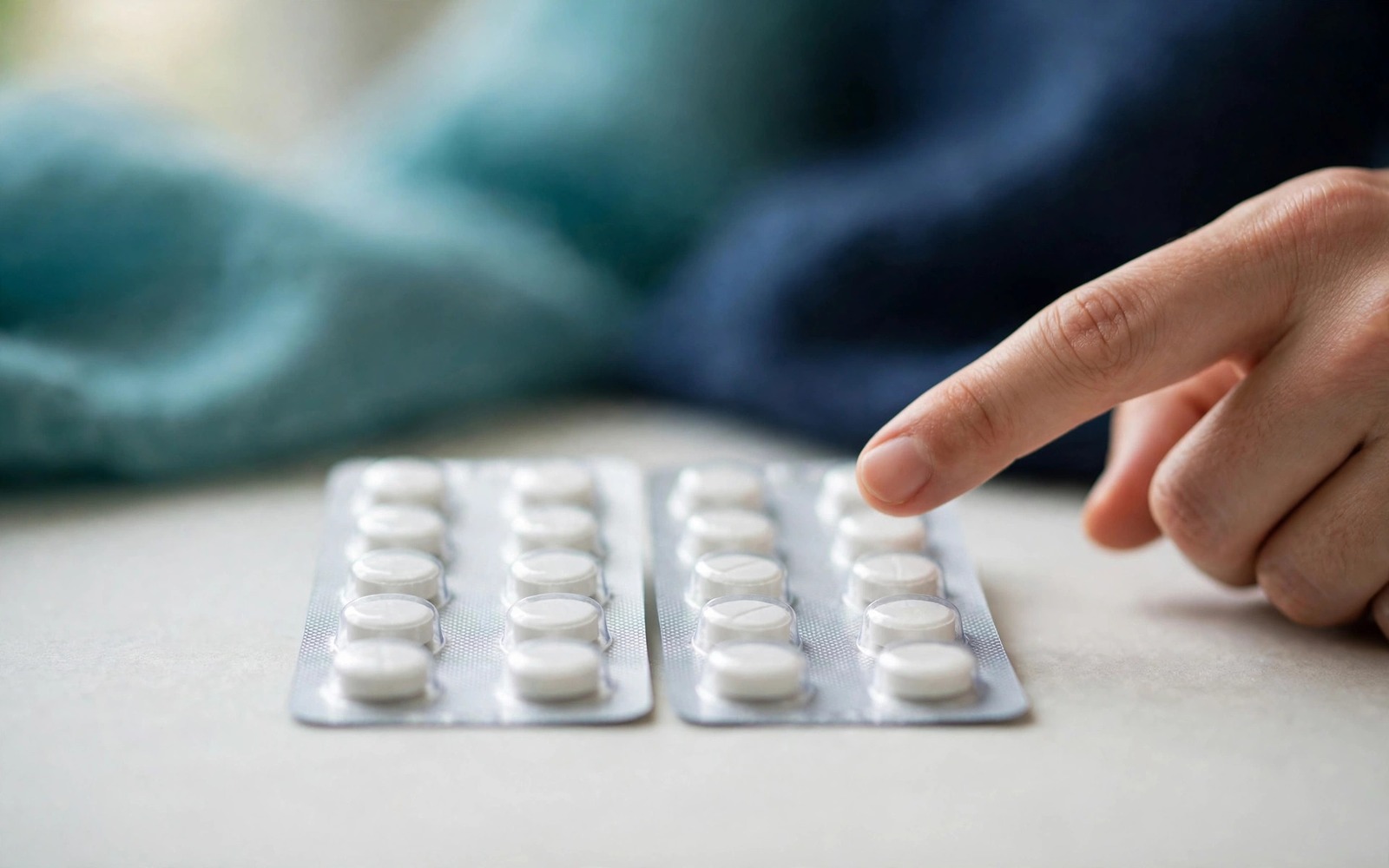
How to Identify Fake Medicine: A Complete Visual Checklist
A step-by-step inspection routine for packaging, print quality, seals and the tablets themselves — the same checks pharmacists use.
8 min readUpdated
Table of contents11 sections
Quick answer
Fake medicines often show blurry or misspelled printing, mismatched batch and expiry between carton and strip, broken or re-glued seals, missing Urdu labels, tablets that differ in colour, size or imprint, and prices far below the M.R.P. No single sign proves a fake: look for several together and verify the batch against DRAP alerts.
Key takeaways
- No single sign proves a medicine is fake — look for patterns of several small problems.
- Compare with a pack you know is genuine whenever you can.
- Check the batch number against official alerts before use.
- When in doubt, do not take it: keep the pack and ask a licensed pharmacist.
Why fake medicines are hard to spot
The WHO estimates that around 1 in 10 medical products in low- and middle-income countries is substandard or falsified. Modern counterfeiters copy cartons, holograms and even batch numbers from genuine stock, so careful, systematic checking matters more than any single tell-tale sign.
Step 1 — Inspect the outer carton
- Printing is sharp, colours are consistent, no smudging or bleeding ink.
- Brand name, company name and address are spelled correctly.
- Urdu labelling is present, as required for packs sold in Pakistan.
- Registration number (Reg. No.), batch (B.No), Mfg and Exp dates are all present.
- Batch and expiry are embossed or laser-printed, not handwritten or stickered over.
- Carton flaps are factory-sealed and not re-glued.
Step 2 — Check the blister, bottle or vial
- Batch and expiry on the blister/bottle match those on the carton exactly.
- The blister foil is intact with no pinholes, bubbles or resealed edges.
- The tray fits the carton snugly — loose or ill-fitting trays are a warning sign.
- Vial caps and seals are unbroken; liquids are clear unless they should be suspensions.
Step 3 — Look at the tablets or capsules
Compare colour, size, shape, coating and imprint (letters or numbers stamped on the tablet) with your previous pack or the official product description. Our Originality Reference and Tablet Imprint Finder show the manufacturer's official description of what genuine tablets look like for many international products.
- Unusual smell, crumbling, chalky texture or cracked coatings.
- Tablets of different shades in the same strip.
- Capsules that are sticky, deformed, or contain clumped powder.
- Injectables with particles, cloudiness or discoloration.
Step 4 — Consider where and how you bought it
| Lower risk | Higher risk |
|---|---|
| Licensed pharmacy with a qualified person on duty | Street sellers, general stores, social media sellers |
| Printed receipt | No receipt offered |
| Price close to the printed M.R.P. | Heavy unexplained discount |
| Original sealed pack | Loose tablets or repackaged strips |
How to compare with a genuine pack
- 1
Place them side by side
In daylight, on a plain surface.
- 2
Compare fonts and colours
Look at the brand logo, small print and colour shades.
- 3
Compare the blister
Foil pattern, embossing and pocket shapes.
- 4
Compare the tablets
Size, shape, colour, coating and imprint, using the imprint finder.
Step 5 — Verify with official data
- 1
Batch alert check
Enter the batch number in the DrugTrace batch check to compare against DRAP recall and rapid-alert notices, or browse the latest fake medicine alerts.
- 2
Scan the 2D code
If the pack has a DataMatrix/QR code, use our 2D Code Decoder to read it, then verify on the official DRAP track-and-trace portal. See how to check a medicine barcode.
- 3
Originality reference
Compare the physical appearance with the official product description.
Common questions
Can I tell a fake just by looking?
Sometimes, but not reliably. High-quality fakes can look identical. Visual checks help you spot obvious problems; official batch alerts and laboratory testing are what confirm a problem.
Sources & references
This guide is general information, not medical advice. DrugTrace.pk is independent and not affiliated with DRAP.
Topic hub
Drug Trace & Medicine Verification
How to check whether any medicine in Pakistan is original or fake.
- Check medicine original or fake ★
- Verify a medicine online
- Check batch number online
- Original medicine check apps
- Dawa check (Roman Urdu)
- How to identify fake medicine (this page)
- How drug trace checks work
- Free medicine check tools
Related topics
Keep reading
 Spotting fakes
How to Check if a Medicine Is Original or Fake in Pakistan (2026)
The complete 2026 method: physical checks, the batch number, the 2D barcode, DRAP's registry and official alerts, in the order pharmacists use them.
9 min read
 Spotting fakes
Substandard vs Falsified Medicines: What's the Difference?
Understanding the WHO categories used in safety alerts, and what each means for patients.
5 min read
 Spotting fakes
How to Spot Fake Injections, Vaccines and Insulin
Injectables are among the most frequently falsified medicines in Pakistan. Learn the vial, ampoule and cold-chain checks that matter.
6 min read